
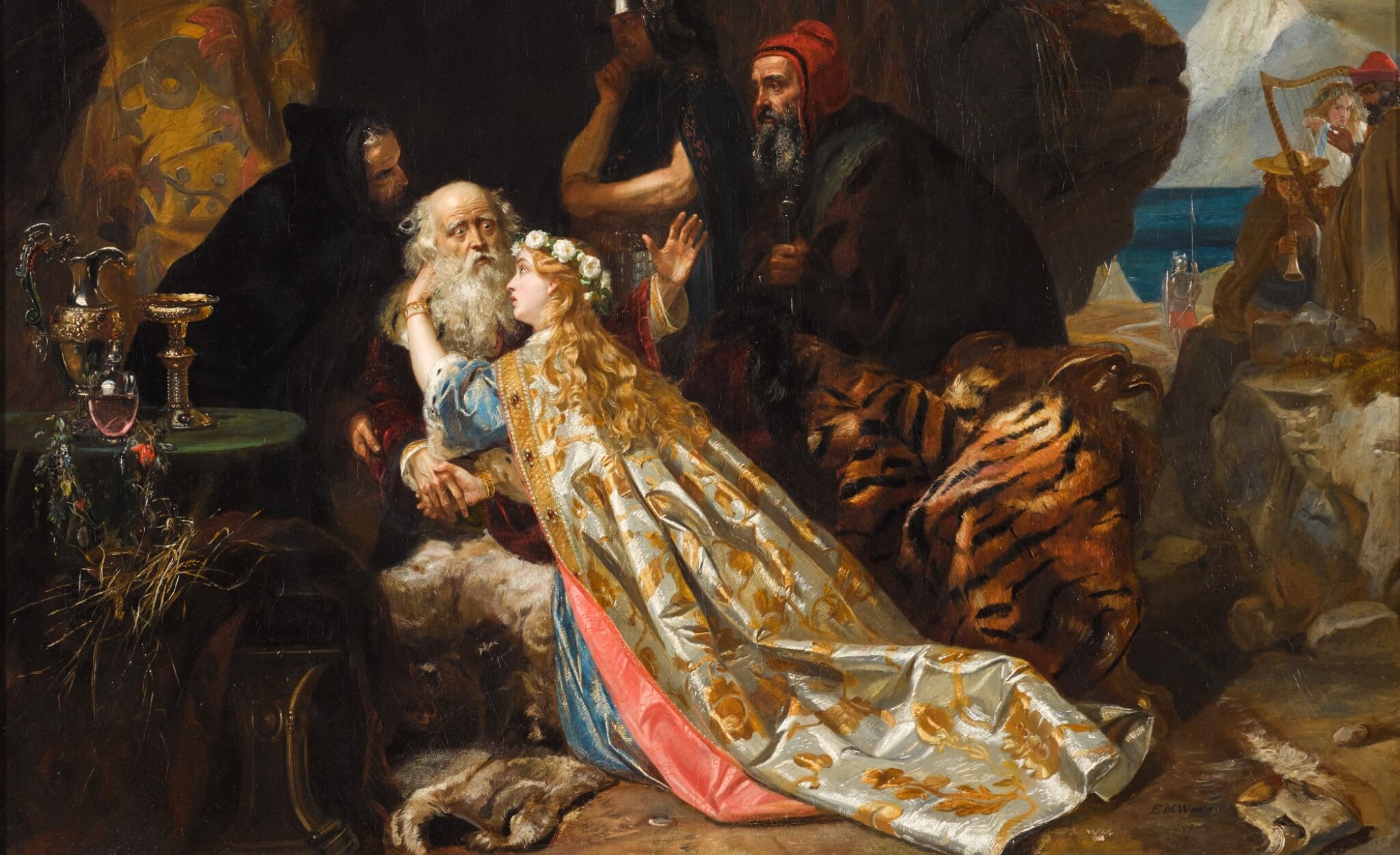
King Lear is one of those texts that students either find overwhelming or genuinely gripping, sometimes both at once. It's a play about a king who gives everything away and ends up with nothing. It's about children who betray their parents, parents who fail their children, and a universe that seems to have no interest in justice. Four centuries after it was written, audiences are still arguing about what it means and whether there's any comfort in it at all.
That's exactly why it's on the HSC. Shakespeare wrote King Lear in 1605-1606, its first recorded performance was before King James I on 26 December 1606. It remains one of the most psychologically and philosophically demanding things you'll encounter in English Advanced. But once you understand the context, the key ideas, and what Shakespeare is actually doing with language, it becomes one of the most rewarding texts to write about.
This guide covers everything you need: historical context, the Aristotelian and Shakespearean terms the play demands, the major themes, key characters, important techniques, and a model paragraph to show you what strong analysis looks like in practice.
To understand King Lear, you need to understand the Jacobean world that produced it. Shakespeare wasn't just writing a story about a dysfunctional family, he was writing for an audience with very specific beliefs about power, order, and the consequences of disrupting both.
The Divine Right of Kings was the dominant political doctrine of the era: a monarch's authority came directly from God, which meant that a king wasn't just a ruler but a divine representative on earth. Sitting at the top of the Great Chain of Being (the hierarchical structure that ordered all of creation from the divine down through angels, monarchs, nobility, commoners, and the natural world), the king held everything together. When Lear chooses to divide his kingdom and abdicate his throne, he isn't just making a bad political decision. He's tearing a hole in the cosmological order that Jacobean society believed held the world in place. The chaos that follows within his family, within the state, and in the natural world itself is Shakespeare's way of showing what happens when that order collapses.
Filial piety was just as central to Jacobean social values as it was to political ones. The relationship between parent and child was understood to mirror the relationship between subject and king. Goneril and Regan's treatment of Lear isn't just cruel by modern standards; for a Jacobean audience, it would have been monstrous, an inversion of the natural order on the same scale as regicide.
The Gunpowder Plot of 1605, a failed Catholic conspiracy to blow up Parliament and assassinate James I, had shaken the country just a year before the play was written. Shakespeare's audience was acutely attuned to the fragility of sovereign power and the devastation that political instability could unleash. King Lear speaks directly to those anxieties.
And then there's the setting of pre-Christian, pagan Britain. This is one of Shakespeare's most consequential artistic decisions. A pagan world has no promise of divine providence, no redemptive afterlife, no guarantee that suffering will be rewarded with meaning. The gods are there, but they don't answer. This is what separates King Lear from Shakespeare's other tragedies, and it's what gives the play its most disturbing, unresolved quality.
It's also worth knowing that Shakespeare had source material to work from such as the legendary history of King Leir from Geoffrey of Monmouth, as well as a 1605 anonymous play called The True Chronicle History of King Leir. In those versions, Cordelia survives and Lear is restored to his throne. Shakespeare killed Cordelia anyway. That decision is one of the most significant in all of English drama, and it should sit at the centre of everything you write about this play.
You can't write sophisticated analysis of King Lear without the vocabulary of tragedy. These aren't buzzwords to scatter through an essay, they're the conceptual tools the play is built on, and using them precisely will immediately sharpen your writing.
Hamartia is the tragic flaw or error of judgment that sets the catastrophe in motion. Lear isn't simply arrogant —it's a compound failure: he can't distinguish between the performance of love and genuine love, and decades of unchallenged power have turned his vanity into narcissism. Crucially, Aristotle understood hamartia not as moral wickedness but as an error of perception. Lear isn't evil. He's catastrophically mistaken in a way his entire life has made inevitable.
Peripeteia is the reversal of fortune. In Aristotelian tragedy, it arises from the very actions taken to secure happiness — which is exactly what happens here. Lear divides his kingdom to ensure a peaceful old age, and that single act accelerates his destruction. By Act II, the man who gave everything away has nothing left.
Anagnorisis is the moment of recognition when the protagonist finally understands the truth of what's happened to them. For Lear, this comes gradually and incompletely across the middle acts. "I am a man / More sinned against than sinning" is the beginning of self-knowledge, not its completion. It arrives too late, and too partially, to change anything.
Catharsis is the emotional purging the audience experiences through witnessing tragedy. Aristotle saw it as tragedy's redemptive function — we feel pity and fear vicariously, and we're released from them. King Lear puts catharsis under serious pressure. The ending is so bleak, so resistant to resolution, that the conventional release feels withheld. That discomfort is deliberate.
Hubris is excessive pride, specifically the kind of overreach that defies natural or divine order. Lear's hubris is his belief that he can retain "the name and all th'addition to a king" while surrendering the responsibilities that make kingship meaningful.
Nihilism is the philosophical position that existence lacks inherent meaning or moral order. The play doesn't endorse nihilism, but it stages it with uncomfortable force through the pagan setting, through Gloucester's despair, and above all through Cordelia's death.
Pathetic fallacy is the attribution of human emotion to the natural world. The storm on the heath in Act III is the play's most sustained example: the external tempest mirrors and externalises Lear's psychological collapse in a way that would have been immediately legible to a Jacobean audience attuned to the relationship between cosmic and human order.
Dramatic irony operates throughout the play, perhaps most powerfully in Act I, when the audience can see exactly what Lear cannot: that Cordelia's restraint is authentic and her sisters' flattery is performance.
Understanding King Lear's characters means understanding what each one represents within the play's larger argument about human nature, power, and justice.
King Lear begins as a figure of absolute authority whose ego has expanded to fill every available space. His hamartia isn't a sudden lapse but the logical endpoint of a lifetime of unchallenged power. The play traces his movement from certainty to madness to a fragile, incomplete wisdom, and it asks whether that journey constitutes redemption or simply destruction. The answer, characteristically for this play, is left open.
Cordelia is the moral centre. She's the only character who refuses to perform a version of herself for Lear's benefit — her love is real, her language plain, and her fate devastating. Shakespeare's decision to kill her is the play's ultimate refusal of redemptive comfort. In King Lear, goodness isn't protected.
Goneril and Regan are not simply villains. They're products of the same power structure that produced Lear — women who have learned to perform whatever is needed to secure their position, and who, once given authority, wield it without restraint. Their cruelty is monstrous, but Shakespeare is interested in the conditions that create it.
Gloucester functions as Lear's parallel in the subplot: a father deceived by a villainous child, destroyed, and brought to a painful insight he can't act on. "I stumbled when I saw" is the play's most compressed statement of its central paradox — clarity that arrives only after it can no longer help.
Edgar moves through the most complex arc: legitimate son, dispossessed fugitive disguised as Poor Tom, guide to his blind father, and finally survivor. His survival at the end is deeply ambiguous. He inherits a devastated world, and his closing lines carry no triumph — only exhaustion.
Edmund is one of Shakespeare's most compelling antagonists: a man explicitly excluded from the social order by his illegitimate birth who decides to remake that order on his own terms. His opening soliloquy — "Thou, nature, art my goddess" — is a declaration of amoral naturalism, and the play never fully disproves his philosophy. He's dangerous partly because he has a point.
The Fool is the one figure who can speak truth to Lear without being destroyed by it, and he does so through riddles, songs, and bitter wit. He disappears from the play in Act III without explanation — one of King Lear's enduring mysteries — and his absence is as significant as his presence.
Kent represents loyalty in its purest form: banished in Act I for telling the truth, he returns immediately in disguise to serve the king who banished him. His presence throughout the play anchors the audience's sense of what genuine devotion looks like.
The love test of Act I Scene I is the play's catastrophic opening gesture, and it tells you everything you need to know about what the play is arguing. Lear's decision to condition the division of his kingdom on a public performance of filial love isn't a sudden whim — it's the kind of distortion that unchecked authority produces in a person over time.
Goneril's hyperbolic flattery "A love that makes breath poor and speech unable" is rewarded precisely because it tells Lear what his vanity needs to hear. Cordelia's refusal to match it "I cannot heave my heart into my mouth" reads to Lear as betrayal. Through dramatic irony, Shakespeare positions the audience to see what Lear cannot: that Cordelia's restraint is the only authentic response in the room.
Kent's warning "See better, Lear; and let me still remain / The true blank of thine eye" signals that what's at stake is not just a family dispute but a structural failure of power. The king has lived so long beyond honest counsel that he has lost the capacity to receive it.
The reduction of Lear's retinue in Act II reinforces all of this. Each negotiation — one hundred knights, to fifty, to twenty-five, to none — strips away a layer of identity: king, father, man. Lear's response "O, reason not the need!" is the first moment in which he begins to understand that he has confused power with selfhood. It's a little too late.
Blindness runs through King Lear as one of its governing structural concerns — literal and metaphorical, and often both at once. Lear can't see Cordelia's love. Gloucester can't see Edmund's treachery. Both men need to be destroyed before they achieve any clarity.
The blinding of Gloucester in Act III Scene VII has a long history of being considered too extreme to stage. But it's also the play's most explicit and concentrated statement about its central theme. The moment Gloucester loses his physical sight is precisely the moment he gains moral understanding: "I stumbled when I saw." The paradox is entirely deliberate. Shakespeare insists that genuine insight in this world costs something irreversible — that clarity arrives only at the price of what made it necessary to learn in the first place.
The heath sequence is the play's emotional and philosophical heart. Stripped of his retinue, his authority, shelter, and eventually his sanity, Lear is exposed to a storm that externalises his psychological collapse through sustained pathetic fallacy. But suffering here isn't merely punishment — it's the condition under which transformation becomes possible.
Lear's instruction to himself "expose thyself to feel what wretches feel, / That thou mayst shake the superflux to them" marks a radical shift. The king who opened the play by converting love into a transaction is beginning, for the first time, to understand the humanity of those outside his experience. Shakespeare's argument is that empathy requires vulnerability, and vulnerability is only available once pride has been completely dismantled.
The play then tests this idea with absolute ruthlessness. Lear's moral awakening does not save Cordelia. Recognition arrives, but it can't undo the damage that preceded it. This is Shakespeare at his most uncompromising: suffering can produce wisdom, but wisdom cannot reverse catastrophe.
Beneath every scene of King Lear is a sustained interrogation of the gap between surface and substance, performance and truth. The love test sets the terms: Lear rewards those who perform love most convincingly, and is destroyed by his inability to see through the performance to what lies beneath.
This extends everywhere. Edmund performs the role of loyal son and virtuous brother so convincingly that Gloucester believes him over his legitimate child. Goneril and Regan perform filial devotion in Act I and reveal their cruelty the moment they have power. Edgar performs Poor Tom so effectively that his own blind father can't recognise him. Even Kent's loyalty is entirely real while his identity is entirely fabricated.
Shakespeare uses all of this to ask what is more true: the name on a person, or the actions that define them.
The pagan setting is the play's philosophical engine. A pre-Christian world has no redemptive arc, no promise that virtue will be shielded from destruction, no afterlife in which deferred justice will finally arrive.
Gloucester's line "As flies to wanton boys are we to the gods" gives the play's nihilism its sharpest articulation. The simile reduces humanity to insects at the mercy of divine indifference: we are not watched over, we are toyed with. Pagan gods are invoked throughout the play, and they respond with unbroken silence.
Edmund's opening soliloquy "Thou, nature, art my goddess; to thy law / My services are bound" establishes an amoral naturalism that the play never definitively refutes. His death at Edgar's hands might be read as providential justice, but Shakespeare keeps this deliberately open. Is Edmund defeated by moral order, or simply by the same amoral wheel he set in motion?
Cordelia's death is the play's most devastating gesture. She is the most morally coherent character in the play. She dies anyway — not heroically, but hanged in prison while Lear was too slow to reach her. Lear's anguished tricolon "Why should a dog, a horse, a rat, have life, / And thou no breath at all?" expresses a universe that makes no moral distinctions between the virtuous and the guilty. The question has no answer, and Shakespeare gives it none.
The play ends not with resolution but with exhaustion. What remains is the act of witness: the audience has seen the worst, and nothing has explained it.
Beyond themes, top-band essays look closely at how Shakespeare achieves his effects. Here are the techniques that matter most:
Animal imagery saturates the play and is used to dehumanise. Lear calls Goneril "a detested kite"; the daughters are repeatedly figured as predatory creatures. This imagery reflects the breakdown of the Great Chain of Being — the natural hierarchy has been inverted, and the language follows.
Repetition is used to devastating effect. Lear's cry "Never, never, never, never, never" upon Cordelia's death is perhaps the most concentrated example in the whole play: five monosyllables that contain an entire universe of loss.
Antithesis — the juxtaposition of opposing ideas in a single structure — appears constantly. "I am a man / More sinned against than sinning" is a textbook example, holding victim and perpetrator in the same breath. The play as a whole is structured on antitheses: sight and blindness, power and vulnerability, love and performance, meaning and void.
Blank verse and prose shift throughout the play. Verse signals elevated speech; prose marks lower social status or psychological breakdown. When Lear descends into madness on the heath, his language fractures. Tracking these shifts reveals something significant about how Shakespeare represents the collapse of social and psychological order.
Stagecraft matters enormously. The storm is created theatrically — through drums, sound effects, and an open stage — and Lear's exposure to it is physically present. The audience sees a king literally unhoused, in simulated chaos. Gloucester's "suicide attempt" at Dover Cliff where Edgar convinces his blind father he has survived a fall from a cliff he never climbed is a theatrical trick that comments on the nature of illusion and belief. The fact that it works suggests something uncomfortable about how easily suffering can be managed through narrative.
Always write in present tense. Literary analysis treats texts as living works: "Shakespeare presents," not "Shakespeare presented."
Don't retell the plot. Every sentence in an analytical response should be asking how and why, not what happened.
Let your evidence do real work. Every quotation you include should be followed by an explanation of what the specific language does and why it matters. A quote without analysis is just description.
Sit with the complexity. The best essays on King Lear don't resolve its tensions — they hold them open. Does Lear achieve redemption? Is the ending nihilistic? Is Edmund's philosophy ultimately disproved? These are questions the play poses, not questions it answers. Engaging with the difficulty, rather than avoiding it, is what distinguishes a top-band response.
Use context to deepen your analysis, not decorate it. Historical context belongs in your essay when it explains why something in the text works the way it does, not as background information dropped in to show you've done the reading.
King Lear refuses the resolution that tragedy traditionally promises. Suffering doesn't produce proportionate wisdom. Virtue isn't protected. The cosmos offers no endorsement of human moral effort. What endures in the play isn't consolation but the act of witnessing — Shakespeare insists that the audience look at the worst the world can do to a person, and not look away.
For Year 11 students, the challenge is to sit with that discomfort and find something to say. The strongest essays aren't the ones that resolve the play's tensions — they're the ones that hold them open, tracing how Shakespeare uses Lear's destruction to ask questions about power, empathy, and meaning that the play deliberately refuses to answer. Master the context, command the terminology, keep asking why — and King Lear will give you more to write about than almost any other text in the course.
At Gold Standard Academy, our Year 11 Advanced English tutoring is built around exactly this kind of deep, analytical engagement with your prescribed texts. Book an introductory session today and start developing the critical voice that makes the real difference in HSC English.

We provide specialised English tutoring for students in Years 7 to 12, helping them build strong foundational skills, master the NSW English syllabus, and excel in HSC English.
Yes, all our lessons are carefully aligned with the NSW English syllabus. ensuring students are fully prepared for school assessments, exams, and HSC English requirements.
We start with an Introductory Lesson to assess each student’s strengths, weaknesses, and learning style. Our English tutors then design personalised lesson plans aligned with the NSW English syllabus to ensure targeted learning.
All our classes are one-on-one. This allows us to accommodate different learning preferences, ensuring each student receives the attention and support they need.
Absolutely. Our tutors are experienced in guiding students through preparing for specific assessments, exams and assignments, providing targeted feedback and strategies to help them succeed.
Yes, we provide weekly content, comprehensive resources, including practice materials, worksheets, and model responses, to help students consolidate their learning and practice independently.
Typically, each session is 90 minutes. Our termly courses are at least once a week, but the frequency can be tailored based on their needs and academic goals.
Yes, we offer both in-person and online tutoring to accommodate different preferences and ensure flexibility in learning.
Yes, we offer new students an Introductory Lesson with no obligation to continue. This allows new students to experience our teaching approach, meet their tutor, and decide if our personalised English tutoring is the right fit for their learning needs.
You can contact us either through our email at tutor@goldstandardacademy.com or call us at 0481 336 988


