
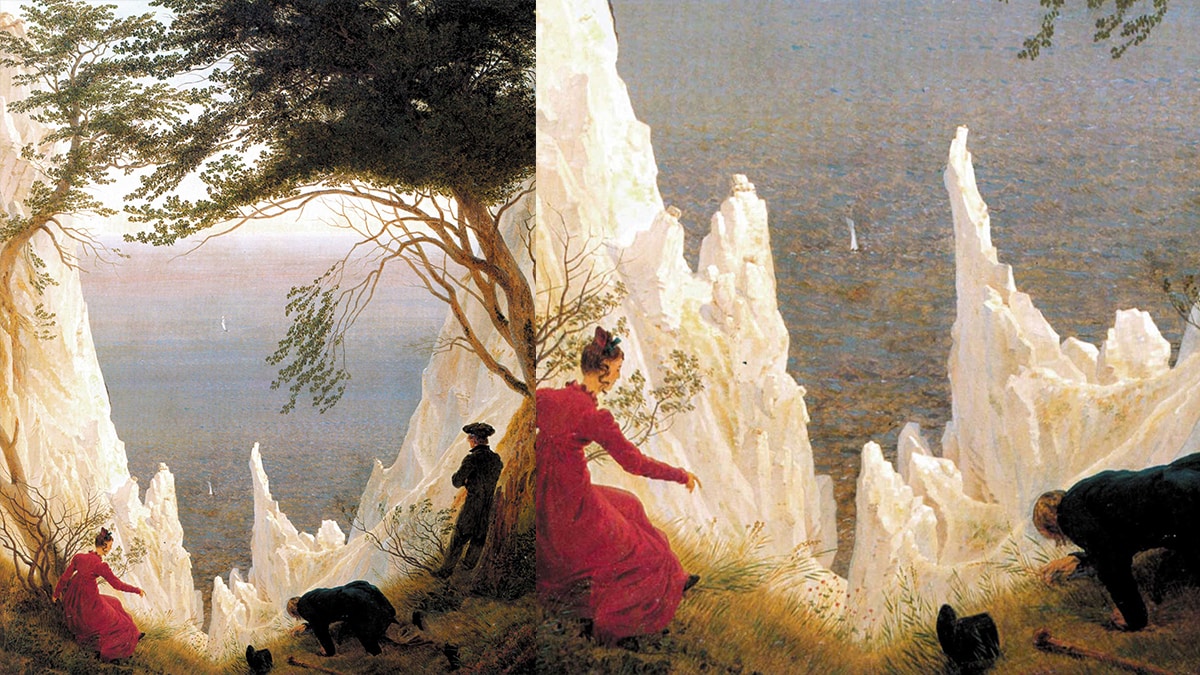
When you hear the word Romanticism, your mind might jump to love letters, candlelit dinners, or the dramatic confession scene in your favourite movie. This is most certainly understandable, but in the world of HSC English, Romanticism is something far bigger and far more intellectually interesting.
Romanticism was one of the most transformative movements in literary history. Emerging in the late 18th century as a direct rebellion against the cold logic of the Industrial Revolution and the rigid rationalism of the Enlightenment, Romantic writers made a bold claim: feelings matter just as much as facts. Imagination is a form of truth. Nature is more powerful than any machine.
In short: Romanticism told the world to stop calculating and start feeling.
For students studying HSC English, particularly those encountering prescribed texts like Coleridge's poetry, Keats, Blake, or Shelley, understanding Romanticism isn't optional; it is foundational.
Romanticism flourished across Europe from the late 1700s through the 19th century. Its writers rejected the idea that logic and science alone could explain human existence. Instead, they championed:
At its core, Romanticism was a response to a world that felt increasingly mechanical and disconnected. Romantic writers believed modern society had stripped people of their capacity for authentic experience, and they wrote against it.
Think of it this way: Romanticism is the literary equivalent of walking through a stormy forest and feeling, rather than measuring, the world around you.
Understanding why Romanticism arose is essential for any strong HSC analysis. Context isn't just background; it shapes meaning.
The Industrial Revolution
Factories, urbanisation, and mechanisation transformed 18th-century life. Cities grew crowded, pollution spread, and many people felt severed from the natural world. Romantic writers responded fiercely. For them, industrialisation wasn't progress; it was the death of beauty and emotional depth.
The Enlightenment
The Enlightenment prized reason and scientific thinking above all else. While these ideas drove intellectual progress, Romantic thinkers argued that something essential was being lost: human feeling, creative vision, and spiritual connection.
Romanticism emerged, in many ways, as a rebellion against pure rationality.
The French Revolution
The ideals of liberty, equality, and individual rights that sparked the French Revolution had a profound influence on Romantic writers. Many were deeply inspired by the idea of challenging authority and championing the individual, themes that flow directly into the literature.
Knowing the conventions of Romanticism allows you to write about prescribed texts with precision and confidence. Here's what to look for:
In Romantic literature, nature is never just a backdrop. It is alive, emotional, and often overwhelming. Romantic poets believed the natural world could inspire spiritual awakening and emotional restoration, a concept known as the sublime: that mixture of awe and terror we feel when confronted by something vast and uncontrollable.
In Wordsworth's Tintern Abbey, for example, nature is not merely described; it is a source of memory, moral wisdom, and inner peace. When analysing Romantic texts, always ask: what role does the natural world play, and what does it do to the human speaker or character?
Romantic writers elevated emotion above reason. Feelings were not weaknesses; they were a form of knowledge. Characters and speakers in Romantic texts often:
This emotional intensity is what makes Romantic literature feel so immediate, even two centuries later.
Romanticism celebrated the individual, particularly the outsider, the rebel, and the visionary. Romantic heroes are frequently misunderstood, alienated, or at odds with the world around them.
Think of Victor Frankenstein, consumed by his obsessive ambition, or Heathcliff in Wuthering Heights, driven by a love that defies social order. These figures don't simply accept the world as it is; they push against it, with profound consequences.
For Romantic writers, imagination was not escapism. It was one of humanity's greatest powers: the capacity to perceive truth that reason alone cannot access. This is why Romantic poetry and fiction so frequently features:
When writing about Romantic texts, recognising the function of imagination, not just its presence, will elevate your analysis.
William Wordsworth — One of the founding figures of English Romanticism, Wordsworth is essential reading for any student encountering nature poetry. His work centres on memory, the restorative power of landscape, and the relationship between the natural world and the human mind. Key texts: Tintern Abbey, I Wandered Lonely as a Cloud.
Samuel Taylor Coleridge — Where Wordsworth was grounded in the real and remembered, Coleridge was fascinated by imagination, the supernatural, and psychological complexity. The Rime of the Ancient Mariner and Kubla Khan are landmarks of the movement.
Mary Shelley — In Frankenstein, Shelley brings Romantic ideals into collision with Gothic horror. The novel explores unchecked human ambition, isolation, and the consequences of playing God, all refracted through a deeply Romantic lens.
Lord Byron — Byron gave the world the Byronic hero: intelligent, emotionally tortured, morally complex, and deeply defiant. His influence can be traced through literature right up to contemporary fiction and film.
John Keats — Keats is the Romantic poet of sensory richness, mortality, and beauty. His odes (Ode to a Nightingale, Ode on a Grecian Urn) reward close reading with extraordinary depth.
Here's the practical question every student should ask: how does this help me in the exam?
Understanding Romanticism gives you a framework for analysing:
Whether you're writing a Module A comparative essay, a Module B critical response, or tackling unseen poetry in Paper 1, Romantic conventions are among the most frequently tested and most richly rewarding to discuss.
When you encounter a Romantic text, train yourself to ask:
These questions don't just unlock Romantic texts; they demonstrate the kind of sophisticated, contextually aware thinking that earns top marks.
Over 200 years after its emergence, Romantic ideas continue to shape how we tell stories. Fantasy literature, Gothic fiction, environmental movements, coming-of-age films, and the contemporary fascination with emotional authenticity and self-discovery all carry traces of the Romantic tradition.
That's not a coincidence. Romanticism succeeded because it spoke to something enduring in human experience: the need to feel, to imagine, to resist, and to connect with the world beyond the rational and the measurable.
In an age increasingly dominated by data and efficiency, Romantic literature offers a powerful reminder that not all truths can be calculated. Some are only felt.
Studying a Romantic text for your HSC? Book a personalised session with Gold Standard Academy and learn how to turn contextual understanding into Band 6 analysis.

We provide specialised English tutoring for students in Years 7 to 12, helping them build strong foundational skills, master the NSW English syllabus, and excel in HSC English.
Yes, all our lessons are carefully aligned with the NSW English syllabus. ensuring students are fully prepared for school assessments, exams, and HSC English requirements.
We start with an Introductory Lesson to assess each student’s strengths, weaknesses, and learning style. Our English tutors then design personalised lesson plans aligned with the NSW English syllabus to ensure targeted learning.
All our classes are one-on-one. This allows us to accommodate different learning preferences, ensuring each student receives the attention and support they need.
Absolutely. Our tutors are experienced in guiding students through preparing for specific assessments, exams and assignments, providing targeted feedback and strategies to help them succeed.
Yes, we provide weekly content, comprehensive resources, including practice materials, worksheets, and model responses, to help students consolidate their learning and practice independently.
Typically, each session is 90 minutes. Our termly courses are at least once a week, but the frequency can be tailored based on their needs and academic goals.
Yes, we offer both in-person and online tutoring to accommodate different preferences and ensure flexibility in learning.
Yes, we offer new students an Introductory Lesson with no obligation to continue. This allows new students to experience our teaching approach, meet their tutor, and decide if our personalised English tutoring is the right fit for their learning needs.
You can contact us either through our email at tutor@goldstandardacademy.com or call us at 0481 336 988


