
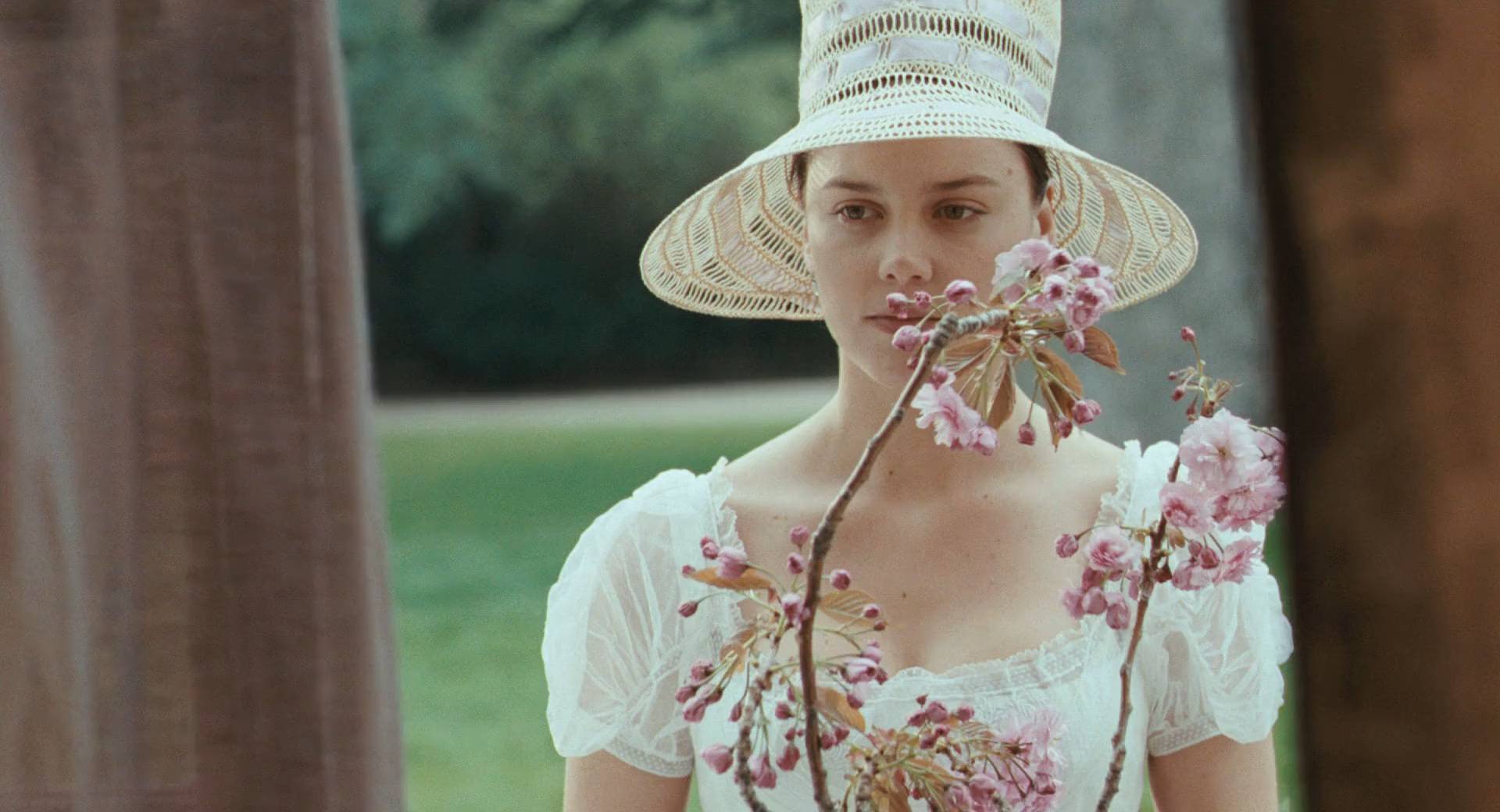
John Keats died in 1821 at just twenty-five, having crammed almost his entire body of major work into a couple of years. Two centuries later, his poetry is still on the HSC syllabus, still quoted at weddings and funerals, and still inspiring filmmakers. What is it about a handful of odes and sonnets that keeps this conversation alive?
Keats wrote during the Romantic era, a period that prized emotion, imagination, beauty and humanity's relationship with nature over the cold rationalism of the Enlightenment. Despite his short life, he left behind some of the most enduring poetry in the English language, grappling with questions about love, mortality, art and what it means to be alive.
Nearly two hundred years later, director Jane Campion took on Keats' life and poetry in her 2009 film Bright Star. Rather than producing a standard biopic, Campion enters into a genuine conversation with Keats' work, reimagining his Romantic ideals through the eyes of Fanny Brawne and for a modern audience.
That conversation endures because both composers are circling the same big questions:
To do well in Module A, you need to see Bright Star as more than "a film about Keats." It's a critical reimagining of his poetry, one that holds onto his Romantic preoccupations while reframing them through contemporary ideas about gender, identity, memory and creativity.
In Module A, a textual conversation describes the deliberate relationship between an earlier text and a later work that reimagines it.
The later composer might:
The simplest way to think about it: Keats explores beauty, love and mortality through Romantic poetry, while Campion translates those same concerns into visual storytelling shaped by contemporary values. Your job is to identify both the resonances, where the texts agree, and the dissonances, where they diverge, and to explain what these reveal about how society's values have shifted.
Keats was writing in the shadow of the Industrial Revolution and Enlightenment rationalism, and the Romantic movement he belonged to reacted against both. Romantic writers valued emotion over reason, imagination over logic, nature over industry, and individual experience over social convention.
His own life fed directly into this worldview. Keats lost both parents while young, watched his brother Tom die of tuberculosis, and was eventually diagnosed with the same disease himself. Mortality wasn't an abstract idea for him; it was the backdrop to almost everything he wrote. Again and again, his poems sit in the tension between beauty and decay, permanence and transience, art and death, reality and imagination.
Campion, working in 2009, approaches Keats from a very different vantage point. Modern audiences bring feminist perspectives, contemporary understandings of identity and grief, and a greater interest in voices that history tended to sideline. Rather than treating Keats' genius as the whole story, Campion gives Fanny Brawne equal weight, turning a narrative traditionally centred on a male poet into one that values female creativity, emotional experience and agency just as highly.
One of Keats' clearest statements on art and permanence comes in Ode on a Grecian Urn. The urn becomes a symbol of art's ability to freeze beauty in time:
"Bold Lover, never, never canst thou kiss"
The repetition captures the paradox at the heart of the poem. The lovers painted on the urn can never act on their desire, but they can also never age, fade or lose what makes them beautiful in the first place. Keats pushes this idea further in his famous conclusion:
"Beauty is truth, truth beauty."
The line suggests art can hold onto truths that ordinary life can't. But Keats doesn't pretend this comes for free; permanence in art means giving up lived experience. The poem holds both the power and the limits of art in view at once.
Campion takes this idea and runs with it in an unexpected direction. The film opens not with Keats, but with an extreme close-up of Fanny sewing, her needle moving in and out of fabric while soft strings play underneath. Before we meet the poet, we meet an artist of a different kind.
Fanny's sewing becomes a visual echo of Keats' poetry throughout the film. Where Romantic society tended to treat "serious" art as a male domain, Campion elevates a traditionally feminine craft to the same status as literature. Her elaborate, self-designed costumes, full of colour and detail, become their own form of creative expression. In doing so, Campion keeps Keats' celebration of beauty intact while quietly pushing back on assumptions about whose art gets to count.
In the sonnet Bright Star, Keats turns to romantic love as a possible answer to mortality. The poem opens:
"Bright star, would I were stedfast as thou art"
He starts by envying the star's permanence, fixed and unchanging in the sky. But by the end of the poem, he rejects that kind of cold, detached immortality in favour of something warmer and more human:
"Pillow'd upon my fair love's ripening breast"
The sensual imagery marks a shift. Keats would rather have the fleeting, physical reality of love than the eternal isolation of a star. He chooses transience over permanence because love is what makes it meaningful.
Campion translates this shift into one of the film's most tender sequences: the first kiss between Fanny and Keats, shot in close-up with warm natural light and a shallow depth of field that makes the rest of the world disappear. For a moment, the two of them seem to exist outside of time.
But the moment is never free of its context. The audience already knows Keats is unwell, so the intimacy carries a quiet ache alongside its warmth. Campion isn't softening Keats' point here, she's reinforcing it: the relationship matters because it can't last, not despite that fact.
Bright Star isn't the only place Keats writes about love, and it's far from the only view he takes. La Belle Dame sans Merci tells a much darker story. A knight is found "alone and palely loitering" in a bleak, lifeless landscape, the sedge withered, no birds singing. He explains how he once met a beautiful, otherworldly woman in the meadows, a "faery's child" with wild eyes, who fed him, sang to him, and led him to her "elfin grot."
There, she lulls him to sleep, and he dreams of pale kings and warriors who warn him:
"La Belle Dame sans Merci / Hath thee in thrall!"
He wakes alone, stranded "on the cold hill's side," unable to return to the life he had before. The poem ends almost exactly where it began, the knight still "palely loitering," trapped in a kind of permanent in-between.
Where Ode on a Grecian Urn treats beauty as something that can be preserved, and Bright Star treats love as something worth having even briefly, La Belle Dame sans Merci shows desire as something that can hollow a person out. The knight isn't dead, but he can't go back to living either.
In the film, Campion has Keats recite this poem to Fanny in a dim, candlelit scene, but she deliberately cuts the final stanzas about the pale kings and princes. The supernatural warning disappears, and what's left is a poem about love, longing and loss.
This is a meaningful choice. Campion isn't interested in the poem's gothic machinery so much as its emotional core, the sense of being changed by love in a way you can't undo. Placed where it is in the film, as Keats and Fanny grow closer while his health and circumstances grow more uncertain, the poem becomes a quiet acknowledgment of what's coming. Campion keeps Keats' sense that love and loss are tangled together, even as she strips away the more fantastical elements of the original.
Written as Keats became increasingly aware of his own mortality, When I Have Fears confronts the anxiety of dying before achieving everything he hoped to. It opens bluntly:
"When I have fears that I may cease to be"
Keats then turns to an agricultural metaphor to express his fear that death will cut short his creative ambitions:
"Before high-piled books, in charactery, Hold like rich garners the full ripen'd grain"
He imagines his unwritten ideas as grain that will never be harvested. By the end of the poem, his worldly ambitions dissolve in the face of death's inevitability, leaving something closer to quiet resignation than despair.
Campion gives this poem one of the film's most affecting scenes. At a Christmas dinner not long after the death of his brother Tom, Keats is asked to recite some poetry. He begins When I Have Fears, but stops partway through, on the line about "high romance," looking at Fanny as he does. He says he's forgotten the rest.
He probably hasn't. Throughout the film, Campion uses muted lighting, blood-stained linen and increasingly sombre cinematography to keep mortality quietly present in the background. The Christmas dinner scene takes the poem's abstract fear of death and makes it personal and immediate, while also widening the lens: Campion is just as interested in what Keats' mortality means for Fanny, and for everyone who has to keep living afterwards, as she is in what it means for Keats himself.
In Ode to a Nightingale, Keats explores how imagination can offer a temporary escape from suffering. The nightingale's song represents a kind of freedom Keats can't access in his own life, caught as he is in:
"The weariness, the fever, and the fret"
But escape through imagination has its limits. The poem ends with Keats unsure of what's even real:
"Do I wake or sleep?"
To Autumn takes a gentler approach to the same idea. It opens with abundance:
"Season of mists and mellow fruitfulness"
but even within this richness, Keats can sense the season turning. The final image,
"And gathering swallows twitter in the skies"
quietly signals the change to come. Beauty and mortality, once again, turn out to be inseparable.
Nature is everywhere in Bright Star, not as background scenery but as something that seems to feel along with the characters. Birdsong, sweeping shots of the countryside, fields of wildflowers and the changing seasons all recur throughout the film, echoing both Ode to a Nightingale and To Autumn.
Campion also embraces what Keats called Negative Capability, the capacity to sit with uncertainty and ambiguity rather than demanding clear answers. Instead of resolving the film's questions about grief, beauty and loss, Campion lets the audience dwell inside them, much as Keats does in his odes.
One of Campion's most memorable additions to this conversation is the recurring image of butterflies. At one point, Fanny fills her bedroom with live butterflies, calling it her "butterfly farm." For a while, the room becomes a kind of living artwork, fragile, colourful and alive.
Then the butterflies start to die. Campion lets the same space that represented beauty and possibility slowly fill with stillness instead. Their short lives mirror both Keats' own and the brief window he and Fanny had together. It's a simple image, but it carries a lot of weight, and it's entirely Campion's invention; there's no equivalent moment in Keats' poetry. It's one of the clearest examples of how she develops his ideas in her own visual language.
Historically, women in Fanny Brawne's position were often treated as muses rather than artists in their own right. Campion pushes back on this from the film's opening frame.
Fanny is presented as sharp, independent and creative, someone with a clear artistic identity through her sewing and self-designed clothing. Characters like Charles Brown repeatedly dismiss her, which only highlights how little space there was for women's creativity to be taken seriously at the time. By centring Fanny's perspective, Campion turns a story traditionally about a male genius into one that takes a woman's inner life and creative voice just as seriously.
It's worth remembering that form isn't incidental here; it's part of the meaning. Keats' poems give readers direct access to his reflections and emotions through language alone. Campion has to find equivalents in a completely different medium, using cinematography, costume, sound and composition to do work that Keats did with words.
The result isn't really an illustration of Keats' poems. It's closer to a genuine dialogue between two forms, each finding its own way into the same ideas.
Bright Star is far more than a biographical film about a Romantic poet. It's a considered textual conversation that holds onto Keats' preoccupations with beauty, love, mortality, imagination and artistic immortality, while reframing them for a contemporary audience.
Across the selection of poems, you can trace how Campion both honours and quietly challenges Keats' worldview. Tracking how these texts resonate and diverge, across context, form and values, is exactly what Module A is asking you to do.

We provide specialised English tutoring for students in Years 7 to 12, helping them build strong foundational skills, master the NSW English syllabus, and excel in HSC English.
Yes, all our lessons are carefully aligned with the NSW English syllabus. ensuring students are fully prepared for school assessments, exams, and HSC English requirements.
We start with an Introductory Lesson to assess each student’s strengths, weaknesses, and learning style. Our English tutors then design personalised lesson plans aligned with the NSW English syllabus to ensure targeted learning.
All our classes are one-on-one. This allows us to accommodate different learning preferences, ensuring each student receives the attention and support they need.
Absolutely. Our tutors are experienced in guiding students through preparing for specific assessments, exams and assignments, providing targeted feedback and strategies to help them succeed.
Yes, we provide weekly content, comprehensive resources, including practice materials, worksheets, and model responses, to help students consolidate their learning and practice independently.
Typically, each session is 90 minutes. Our termly courses are at least once a week, but the frequency can be tailored based on their needs and academic goals.
Yes, we offer both in-person and online tutoring to accommodate different preferences and ensure flexibility in learning.
Yes, we offer new students an Introductory Lesson with no obligation to continue. This allows new students to experience our teaching approach, meet their tutor, and decide if our personalised English tutoring is the right fit for their learning needs.
You can contact us either through our email at tutor@goldstandardacademy.com or call us at 0481 336 988


